
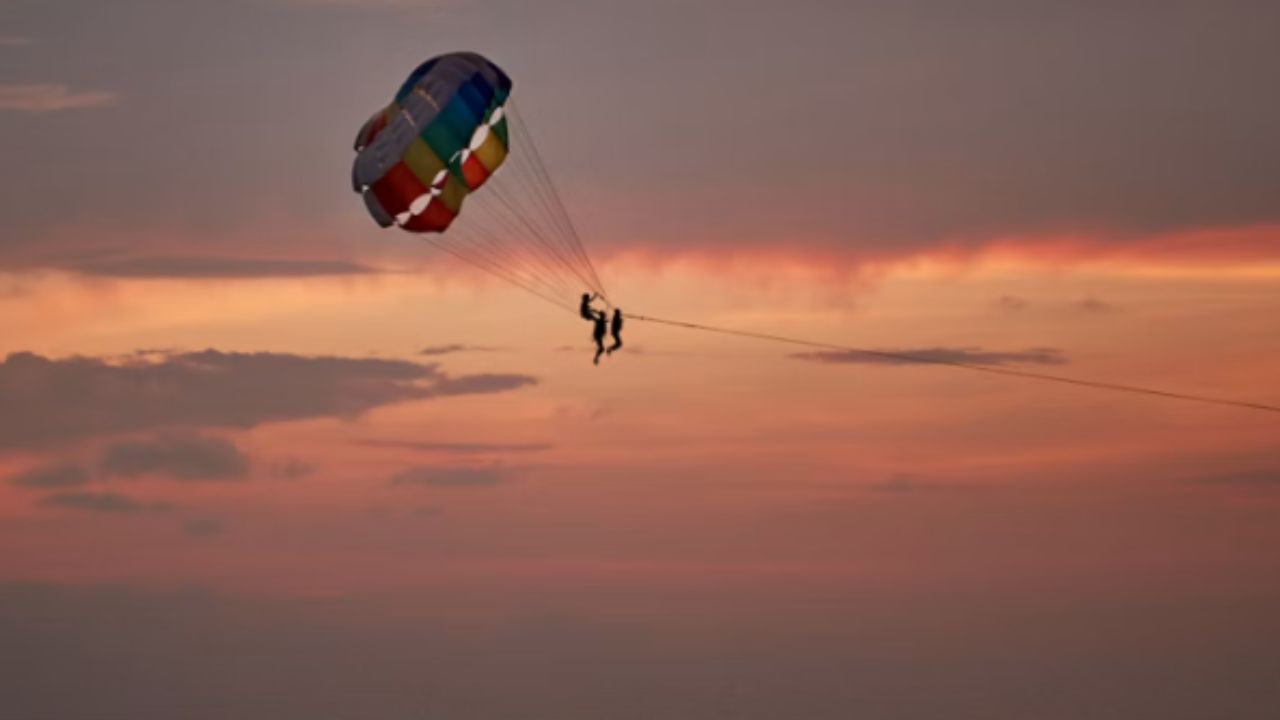
Both parasailing and hand gliding lift you off the ground and into open sky. Beyond that, the two activities are fully different. One is a relaxed ride behind a boat. The other is a skill-based sport you train for over months. This breakdown covers all the essential differences between them.
Parasailing vs. Hang Gliding: Differences at a Glance
| Feature | Parasailing | Hang Gliding |
| Launch method | Towed off a boat deck | Foot-launched from a hill, or towed by winch or aircraft |
| Who controls the flight | The boat captain, using a winch | The pilot, through body weight shifts |
| Training required | None | Progressive certification through a rated program |
| Typical altitude | Roughly 200 to 500 feet | Varies widely, often much higher with good conditions |
| Typical flight time | A few minutes per ride | Anywhere from minutes to several hours |
| Setting | Over water, from a boat | Over land, from hills or designated sites |
| Physical effort | Minimal, mostly sitting in a harness | Moderate to demanding, active piloting |
| Best suited for | A relaxed aerial experience with no prep | Riders who want to learn to fly themselves |
What Is Parasailing?
Parasailing straps you into a harness connected to a large, parachute-like canopy. A boat tows you behind it on a long line. As the boat picks up speed, the canopy fills with air and lifts you off the deck. You rise steadily, hover at altitude for several minutes, then get reeled back down.
The experience asks very little of you. There’s no jumping, no steering, and no training required beforehand. The boat captain controls your height and speed through a hydraulic winch system. You simply sit back and take in the coastline. The crew handle the rest.
What Is Hang Gliding?
Hang gliding puts you inside a light, unpowered aircraft. It has a rigid frame and a fabric wing shaped like a triangle. You launch on foot, usually by running off a hill or slope. Alternatively, you are towed into the air. Once airborne, you fly in a prone position, suspended below the wing in a harness.
Control comes entirely from your own body. Pilots steer by shifting their weight against a control frame. It tilts the wing and changes direction. To get started, you need instruction through a certified school, where new pilots build skills gradually.
Parasailing vs. Hang Gliding: Key Differences

How You Launch
Parasailing skips the running and jumping entirely. You sit on the back of a boat. The crew tows you aloft as the vessel accelerates. There’s no cliff edge and no physical exertion involved.
Hang gliding works the opposite way. Pilots foot-launch by running off a hill or ridge until the wing catches air and lifts them off the ground. Some pilots use a ground-based winch instead. Yet others get towed up behind a small aircraft. Either way, launching takes coordination and practice.
How You Control the Flight
Once you’re airborne while parasailing, you’re a passenger. The boat captain manages your altitude and speed from below. You have no steering input at all. It’s a ride, not a piloted flight.
Hang gliding hands you full control. Pilots move their body weight against the control frame to bank, climb, or descend. This active piloting is exactly why the sport takes real skill to learn.
Skill and Training Required
Parasailing needs zero training. You show up, get fitted with a harness, listen to a short safety briefing, and go. No prior flying experience matters.
Hang gliding runs on a structured rating system. Through USHPA, pilots progress from Student (H0) through Beginner, Novice, Intermediate, Advanced, and finally Master (H5). Each level demands demonstrated skills in launching, maneuvering, and landing under supervision. Only after that can a person move up.
Flight Experience
Parasailing feels passive and calm. You’re carried through the air while the boat does the work. That’s why it feels more like floating than flying. Many riders describe it as peaceful and not intense.
Hang gliding feels like actual flight. You’re lying flat, facing forward. You are actively steering a wing through open air. Pilots describe a strong sense of control and connection to the aircraft that a towed ride can’t match.
Height and Airtime
Hang gliding doesn’t follow one fixed altitude or flight length. Duration depends heavily on wind, thermals, and a pilot’s ability to find lift and stay soaring. Skilled pilots can extend a single flight well beyond what a beginner might manage.
Parasailing tends to run shorter and more consistent. Since a boat controls the whole flight. Sessions are within a set time window. They don’t stretch based on conditions or skill. Airtime is measured in minutes and not hours.
Where You Fly
Hang gliding depends on the right launch site. Pilots need hills or ridges. Alternatively, they need open land with favorable wind and atmospheric conditions to get airborne safely. Site selection is a core part of the sport.
Parasailing is boat-based by nature. This means it happens over water. You won’t find commercial parasailing on a mountainside. This is because the whole setup relies on a vessel with enough speed to lift the canopy.
Best For
Parasailing suits someone who wants a scenic, low-effort aerial experience without learning to fly anything. It’s an easy add-on to a beach day.
Hang gliding suits someone who wants to actually pilot an aircraft. You need to have patience, and become properly trained. Most importantly, you must have a genuine interest in mastering flight control over time.
Parasailing vs. Hang Gliding Cost
Parasailing is a commercial ride with a simple price tag. Most single or tandem flights run $50 to $130 per person. Flight time ranges from 10 to 15 minutes in the air at a beach resort. No training or equipment purchase is required. This is because you’re riding behind a professional operator’s boat.
Hang gliding costs far more to get into as a sport. An introductory tandem flight with a certified instructor typically is between $175 to $225. Full certification and lessons add another $1,500 to $3,000. Buying your own gear brings the total higher still. A new wing costs $4,000 to $5,000 and a harness runs about $1,000. A reserve parachute adds roughly $700. Used gear can cut those costs by half or more. You can get quality secondhand gliders for around $1,800 sometimes.
Try Parasailing in San Diego With Go Parasailing
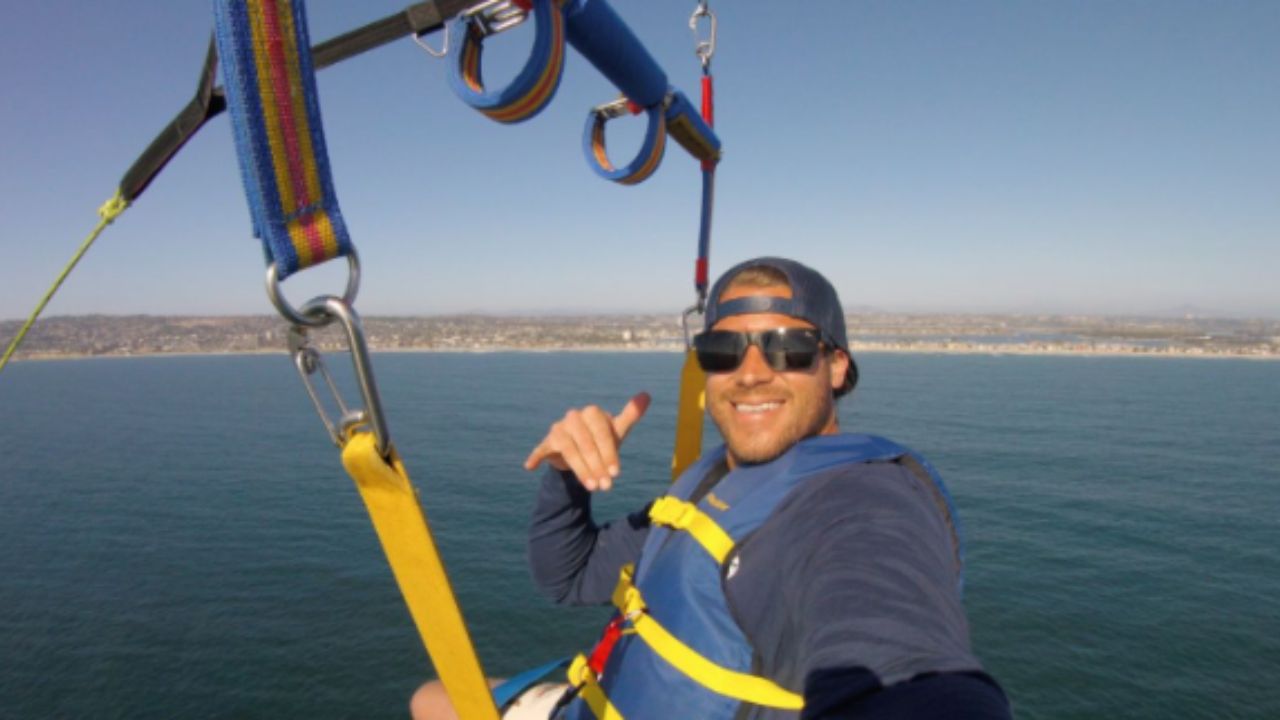
If the passenger-style ride sounds like your kind of adventure, Go Parasailing operates right out of Mission Bay in San Diego. Our winch-direct system means you take off and land straight from the back of the boat. Thus, there’s no beach launch and no learning curve.
Our most popular option, the CloudHopper flight, sends you 600 feet up for six to eight minutes of airtime. The full outing, including the boat ride out and back, takes about an hour and 25 minutes. It’s a comfortable pick for first-time flyers who want a scenic ride without any prep work.
Two Skies, Two Very Different Rides
Parasailing and hang gliding both put you above the water or the hills. But they ask completely different things of you. One hands you the view without the workload. The other hands you the controls and asks you to earn the view yourself. Both are exciting activities. The best decision is made when you consider what kind of flying you’re after.
FAQs
What is the fatality rate of hang gliding?
USHPA accident data shows an average of about three to four hang gliding fatalities per year in the US, among several thousand active pilots. Most serious accidents trace back to pilot decisions and not equipment failure. Proper training and site selection lower the risk considerably.
What happens if you fall while parasailing?
If a tow line fails, the parasail canopy doesn’t drop straight down. It glides slowly toward the water, acting more like a wing than a falling object. Riders wear a life vest throughout the flight. Thus, they float once they reach the surface. Boat crews are trained to retrieve you quickly.
Is parasailing scary or relaxing?
Most first-time flyers expect fear and find calm instead. Takeoff is gradual, with no sudden jolt or jump. Once airborne, the boat noise fades and the ride feels smooth and quiet. Most nerves settle within the first few seconds of liftoff.
Is parasailing hard on your back?
Parasailing places minimal strain on your back for most riders, since you sit in a supportive harness the entire time. People with recent back or neck surgery, or serious spinal issues, should check with the operator and a doctor before booking a flight.
How risky is hang gliding?
Hang gliding carries more inherent risk than parasailing, since pilots actively control the aircraft in changing wind and weather. Structured training through certified schools significantly reduces that risk.