
Parasailing is safe for beginners when the right equipment is used and checked properly, and most of that safety comes from eight core pieces of gear working together.
The view looks unreal, but the mind keeps asking practical questions. Is the gear strong enough? What if something snaps? Who controls the speed? These are fair thoughts.
If you are planning your first ride and wondering, “Am I really secure up there?” This guide answers that first. You’ll also learn how each piece of equipment protects you, why it matters, and what to look for before you say yes to the flight.
Why Parasailing Equipment Matters
Most first-time parasailers think being brave is everything. But in reality, it is not. Equipment quality and setup decide almost everything. When parasailing runs smoothly, it feels calm, almost peaceful. When it does not, the cause is usually worn gear, rushed checks, or poor boat coordination.
Professional operators offering services such as tandem parasailing rides and boat parasailing experiences. We build our entire operation around equipment checks. Saltwater, wind, and weight leave no room for guesswork.
8 Parasailing Equipment That Keep You Secure
1. Parasail Canopy
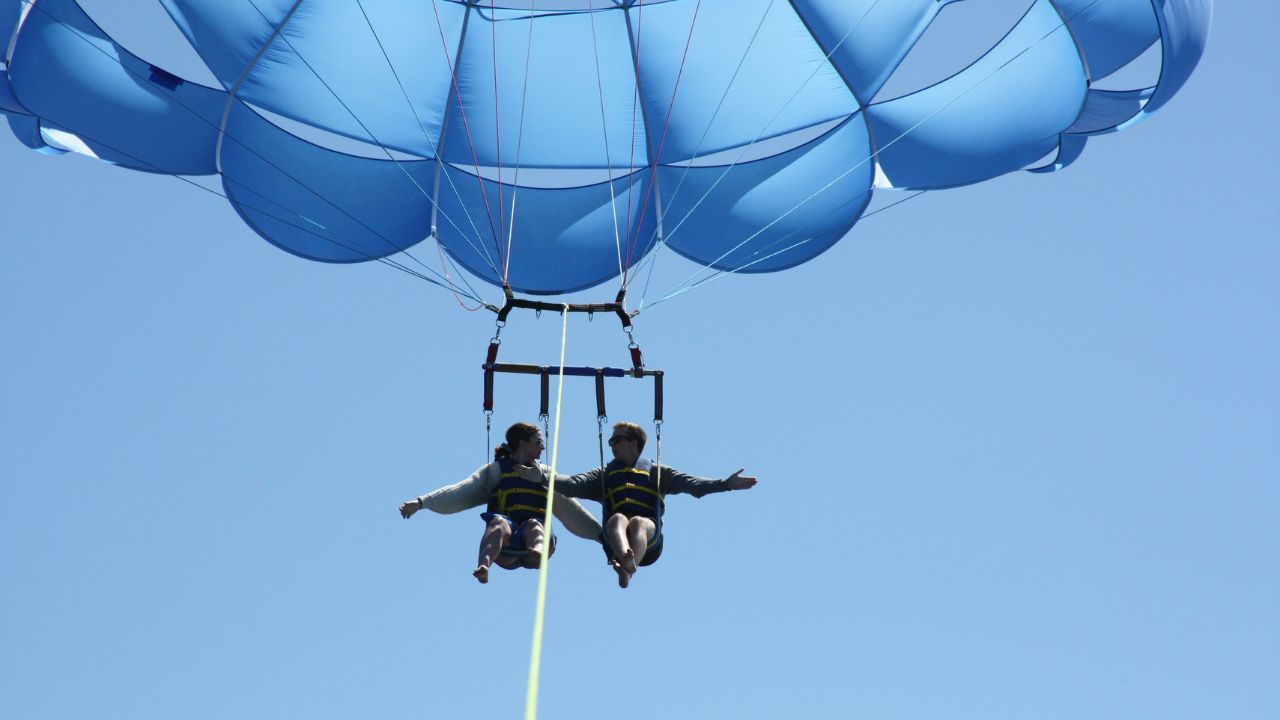
The canopy is your wing, your elevator, and your brake system all at once. It catches the wind and lifts you, but it also controls stability. A good canopy is made from high-strength ripstop nylon that resists tearing even under sudden gusts.
What most people do not realize is that size matters. Larger canopies create gentler lift and smoother rides, which is why beginners are often paired with bigger sails. Smaller ones react faster and are usually reserved for experienced flyers.
When you look at a canopy before takeoff, check for clean stitching and even panel shapes. Wrinkles or faded fabric can hint at age. A fresh, well-kept canopy is a quiet sign of a responsible operator.
2. Harness System
If the canopy is the wing, the harness is your seatbelt. It wraps around your hips and legs and connects you to the entire setup. Modern parasailing harnesses spread weight evenly, so there is no sharp pressure point during flight.
Many people wonder if the harness will hurt their back or legs. Now, here’s the answer. A properly sized harness should feel snug, not tight. You should be able to sit into it like a swing. If it feels like it is cutting in, you should always inform the crew member, and they’ll adjust it right away.
Most professional boat parasailing equipment setups use padded harnesses with reinforced webbing. That padding is not for comfort alone. It prevents circulation issues during longer flights.
3. Tow Rope
The tow rope connects you to the boat, and it carries massive tension. We are talking thousands of pounds of load when wind and speed combine. That is why parasailing ropes are not ordinary marine ropes.
They are made from braided Spectra or Dyneema fibres. These materials are light, incredibly strong, and resistant to stretching. Less stretch means more control and fewer sudden jerks.
Before boarding, just notice how the rope is stored. Is it coiled neatly? Are there visible frays? Experienced crews inspect ropes daily because salt and sun slowly weaken even the best fibres.
4. Swivel Bar
This small metal bar is easy to overlook, but it solves a big problem. As you rise, the wind can cause gentle spinning. Without a swivel, the rope would twist, tighten, and stress the system.
The swivel bar rotates freely, keeping the rope straight and balanced. It also connects multiple harness points during tandem or triple flights.
These are just like joints in your body. You do not notice them until they stop working. A smooth swivel keeps the entire flight calm.
5. Winch System
On modern boats, the winch controls ascent and descent. It lets the crew reel you out smoothly and bring you back without sudden drops. Older setups relied on boat speed alone, which required more skill and carried more risk.
A powered winch adds precision and allows the captain to adjust height based on wind changes and bring flyers down gently if conditions shift.
When choosing an operator, ask if they use a winch launch and recovery system. It is a quiet upgrade that makes a big difference for beginners.
6. Boat and Engine Setup
Parasailing safety does not float in the air alone. It starts with the boat. A dedicated parasailing boat has a wide deck, reinforced tow points, and a stable hull design.
The engine must deliver smooth, steady power. Jerky acceleration causes uneven lift, which can scare new flyers and strain the rope. Skilled captains maintain a constant pace that matches wind conditions.
This is why professional boat parasailing equipment includes more than just gear. It includes the vessel itself, tuned for one job.
7. Life Jacket
Yes, you are flying, but water safety still matters. A parasailing life jacket is slimmer than a standard one, so it does not interfere with the harness. It is designed to keep your head above water if you land unexpectedly.
Many people wonder if they really need to wear it if they know how to swim. The answer to this is yes. Fatigue, waves, and surprise splashes changes everything. A life jacket buys time and calm, which are priceless in open water.
8. Safety Helmet and Communication Signals
Not all locations require helmets, but many operators use lightweight head protection during launch and landing. These moments involve moving ropes and metal parts.
Even more important is communication. Hand signals and crew cues guide you throughout the ride. A raised thumb, a bent knee, or a wave means something specific. At Parasail San Diego Adventures, our operators explain these clearly before takeoff.
Clear signals turn you from a passive passenger into an aware participant. That awareness is its own safety layer.
How Services Fit Into the Safety Picture

When booking through experienced providers, you are not just paying for airtime. You are paying for layered safety built into services such as single or tandem parasailing rides and professionally managed boat parasailing operations.
These services typically include:
- Pre-flight equipment checks
- Weight and wind assessment
- Trained crew handling launch and recovery
- Emergency protocols if the weather shifts
If the price reflects quality gear, trained staff, and calm execution, the answer is usually yes.
Be Safe and Parasail Carefree
Parasailing should feel like trust, not tension. When the right equipment supports you from harness to canopy, your mind relaxes, and the view takes over. So when you look down at the water and realize you are smiling instead of gripping the straps, ask yourself one last thing. If safety feels this quiet and effortless, why did you ever doubt it?