
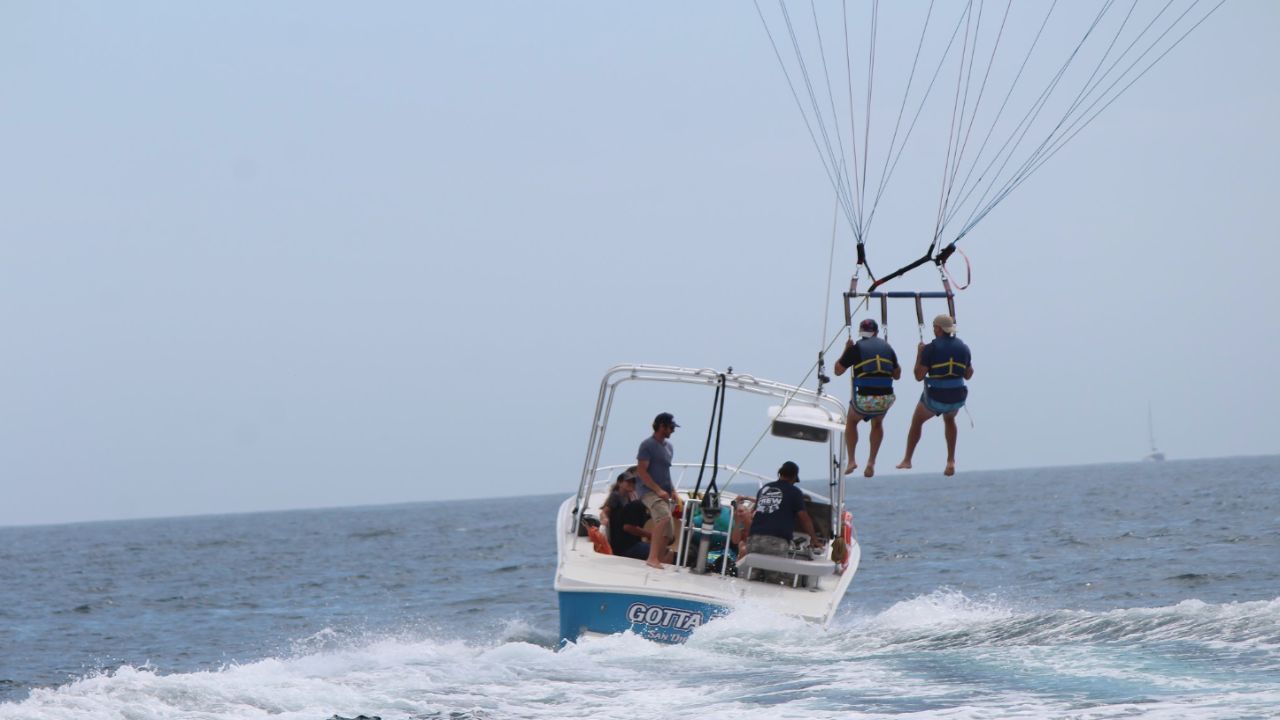
Let’s get straight into the answer to the most asked question: No, parasailing does not usually get you wet. You launch and land on the boat. An ocean dip is often optional. Still, light spray may reach you during the boat ride.
So, does parasailing get you wet enough to need swimwear? Not always. Regular clothes can work if you stay dry. Yet a swimsuit offers more freedom if you change your mind. Here is what first-time flyers should know before leaving the dock.
Does Parasailing Get You Wet?
Modern winch-direct parasailing keeps you above the water. A powered winch lifts you from the rear flight deck. It also brings you back onto that same deck. You do not run from a beach or swim offshore.
That setup explains why most flyers remain dry. San Diego Parasail Adventures also confirms that riders typically stay dry. You can request no dip before your flight begins. The crew then plans your descent with that choice in mind.
Yet staying dry is not an absolute promise. Sea spray can reach the boat on choppy days. The operator also notes that rare water landings can occur, which is also why every flyer wears a life vest.
How Wet You Get Depends on Three Things
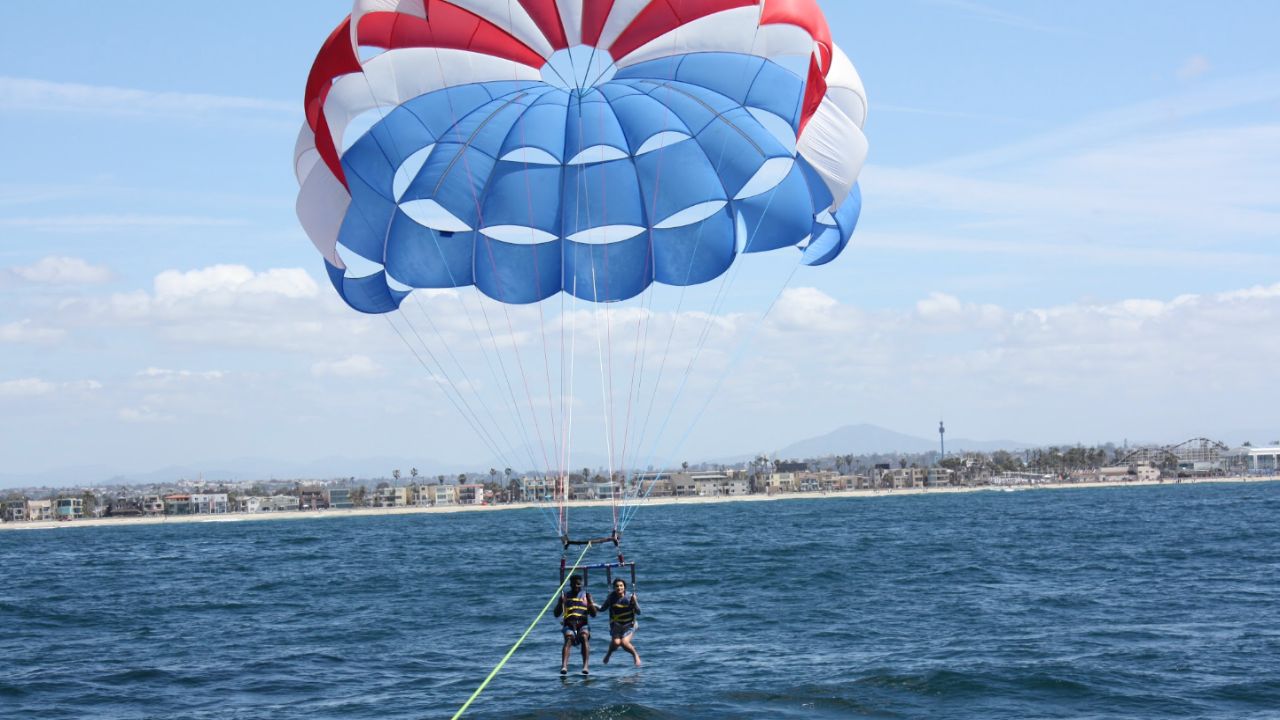
Most people picture two very different scenes. One has a flyer floating high and staying bone dry. The other ends with a huge splash into the sea. Real parasailing usually sits somewhere between those scenes.
The boat ride creates the most unexpected water contact. Spray can rise near the deck when seas feel rough. Wind may also push fine mist toward your hair. It feels more like sea mist than a shower.
The captain can also lower your feet toward the water. This fun dip usually happens near the flight’s end. If you want to keep your shorts dry? Ask for feet only. If you want no water contact? Say so before takeoff.
Three factors control how wet you may become:
- Boat spray: Small drops may reach your face, hair, or clothes.
- An optional dip: Your feet or legs may touch the ocean.
- A rare water landing: This can soak you from head to toe.
The final case is uncommon, but it remains possible. Your life vest adds protection if it ever happens. Listen closely during the crew’s safety talk.
What an Optional Ocean Dip Feels Like in San Diego
San Diego’s ocean dip can feel colder than expected. But sunshine makes the Pacific look warm and mild. Then your toes touch the water, and that first chill may prompt a very loud laugh.
The difference feels sharper during spring or early summer. San Diego Bay water changes throughout the year. Therefore, checking the day’s water reading still helps. A warm beach afternoon does not ensure warm ocean water. This is classic San Diego weather.
The dip itself is brief. The winch lowers you as the boat changes speed. Your feet may skim the surface for several seconds. Then the line lifts you before your deck landing.
So, should you try it? Choose the dip if you enjoy playful thrills. Skip it if cold water ruins your mood. There is no medal for wet shorts. Tell the crew how much contact you want. “Feet only” is clear and hard to misunderstand. If you want to stay dry, say that instead. Your call.
What If You Want to Stay Fully Dry?
Speak with the captain before your harness goes on. A clear request works better than a vague nod. Simply say, “Please keep me dry and skip the dip.” It also helps to repeat your choice before takeoff. The boat can be loud, especially near the stern. A second quick check takes only a few seconds.
Try to sit farther from heavy bow spray when possible. Crew instructions and seating needs still take priority. Wind and sea conditions may also change during the trip. Complete dryness can never be guaranteed offshore.
Even so, most riders who decline the dip stay dry. They step back onto the deck without entering the sea. Parasailing looks wetter from shore, but it’s not.
What to Wear Parasailing in San Diego
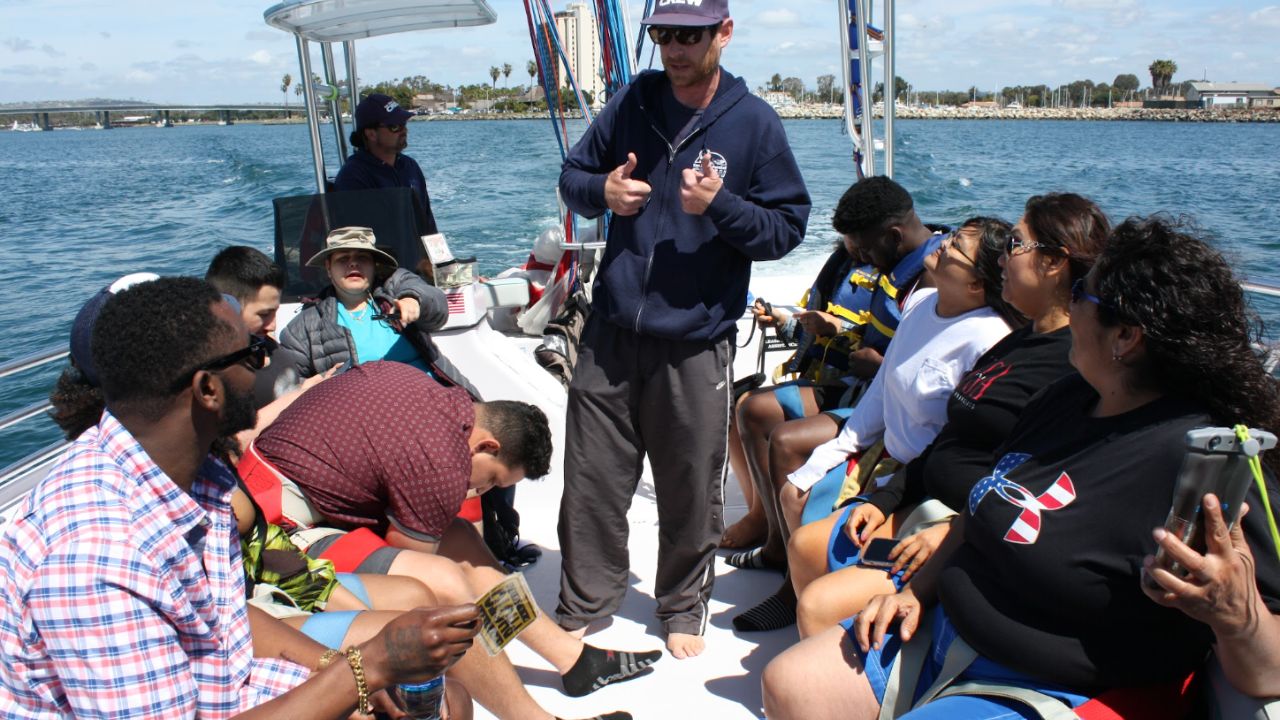
Do not dress only for warm air inland. San Diego’s coast often starts cool and gray. Locals know the marine layer can hide the sun. A light jacket feels wise during those early boat rides.
Wear a swimsuit beneath shorts if you might dip. That choice saves an awkward change at the dock. Quick-dry clothes also feel better after stray spray. Jeans are allowed, but wet denim feels like a sandbag.
San Diego Parasail Adventures says casual beach clothes work well. Shorts, shirts, swimsuits, sandals, and sneakers are suitable. But it’s always good to go barefoot during flyer board and parasailing. Also, bring one warm layer for the boat ride.
A simple outfit may include:
- A swimsuit beneath light, quick-dry clothes
- A sweatshirt or windbreaker for cool mornings
- Sunglasses secured with a snug strap
- Sunscreen applied before boarding
- Tied-back hair that stays clear of the harness
Skip loose hats during the flight as ocean wind can steal one within seconds. Also, long necklaces and loose jewelry may also snag, so leave them ashore.
Is Parasailing Suitable for Non-Swimmers?
Yes, non-swimmers can usually parasail without any worries. Takeoff and landing occur on the boat’s flight deck, and you’re not expected to paddle or tread water. A fitted life vest stays on during the flight.
Still, tell the crew if you cannot swim. This helps them explain each safety step clearly. It also lets you ask questions without feeling rushed. Honest details help everyone.
Does parasailing get you wet if you cannot swim? Your swimming skill does not control the dip. You can decline all planned water contact. The captain controls the winch and your landing.
Some nervous guests fear falling into deep water. That concern makes sense when viewing the flight from shore. Yet the launch feels slow and steady, not like a drop. The winch does the hard work.
What Nobody Tells You About Staying Dry
Skip the dip, and you may still feel damp. Fine salt mist can settle on your hair, and sunglasses may collect tiny spots during the boat ride. Lips can also taste salty afterward.
Your phone faces a bigger risk than your clothes. One splash can reach an open charging port, or a loose phone may also slip from your hand. This is why the operator strongly discourages personal camera gear for this reason.
Wind changes everything. At the dock, your phone may feel secure. Offshore, wet hands and moving decks change that fast, and one careless selfie can become fish property.
San Diego Parasail Adventures offers a tethered GoPro photo and video package. It records the flight without an unsecured personal camera. That option may suit guests who want stress-free footage.
Your towel may not be needed at all; still, keep one in your car. It feels useful after an unexpected splash.
Quick Packing List for a Mostly Dry Trip
Keep your boat bag small as space can be tight when several guests fly. Bring gear that solves real problems, not half your hotel room. These items cover most needs:
- Reef-safe sunscreen in a sealed bottle
- A dry bag for keys and spare clothes
- A strapped case if phones are permitted
- A small towel left inside your car
- Motion sickness aids, if approved by your doctor
- A hair tie for long or loose hair
Ask about phone rules before boarding the boat. Policies differ between operators and may change. Also, never assume a waterproof pouch makes a phone unsinkable.
Choosing Between San Diego’s Two Flight Options
San Diego Parasail Adventures offers two main flights. The CloudHopper uses 600 feet of flight line. It provides about six to eight minutes of airtime with a full boat trip that lasts around 1.25 hours.
The SkyRider uses 800 feet of flight line. It adds height and around two more flight minutes. Both options launch from the boat’s rear deck. Neither option requires a planned ocean landing.
For many first-timers, the CloudHopper feels like a smart start. Six to eight minutes provides time to settle in. You can enjoy the view without a longer flight. It also includes the same winch-direct launch style.
Final Thoughts
Is the trip worth the cost if you stay dry? Yes, because the view is the main event. The dip is only a playful extra. San Diego’s coastline looks very different from above.
Most parasailing trips end with dry clothes and windblown hair. Tell the crew what you want before takeoff. Dress for spray, even when skipping the dip. Then decide whether those cold Pacific toes sound fun.
FAQs
Q1: Do you land in the water while parasailing?
Usually, no. Winch-direct parasailing returns you to the boat’s flight deck. A planned foot or leg dip may be offered. Rare water landings remain possible.
Q2: Can you parasail without wearing a swimsuit?
Yes. Shorts, shirts, or other casual clothes can work. Choose quick-dry fabric if spray concerns you. A swimsuit helps if you request a dip.
Q3: Do you need to know how to swim?
No. San Diego Parasail Adventures does not require swimming skills. Every participant wears a life vest during the flight. Tell the crew if you feel nervous.
Q4: Does parasailing get you wet enough to need a towel?
Usually not, unless you request a deeper dip. Still, keep a towel nearby. Would you rather pack one small towel or ride home in wet shorts?