
The answer to “How long do you usually parasail for?” is simple. The average time people spend in the air while parasailing is about 8 to 12 minutes. However, the full trip often lasts between 1.5 and 2.5 hours. This might sound confusing to you, ten minutes flying, and two hours on the water, but once you know how the day works, it makes perfect sense.
A parasailing trip is not just the flight. It includes check-in, safety talks, boat time, and waiting for other riders. In this guide, we’ll look at how much time a person spends while parasailing and what are the factors that affect the flight time.
How Long Do You Usually Parasail For?
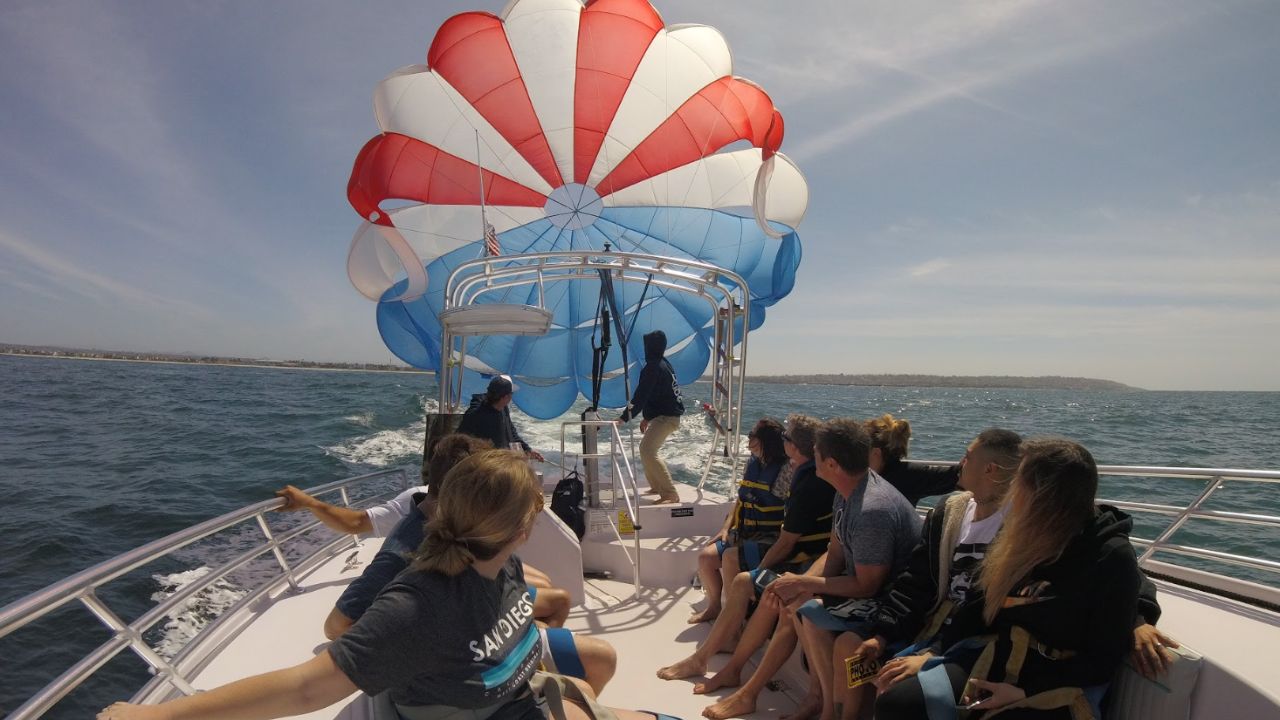
Most parasailing flights last 8 to 12 minutes in the air. Some operators offer premium 12 to 15-minute slots, while busy operators may keep flights closer to 6 to 8 minutes.
The number you’ll find everywhere is 8 to 12 minutes. Take San Diego Parasail Adventures as an example. Their CloudHopper flight sends out 600 feet of line and includes about 6 to 8 minutes of airtime. Their higher SkyRider flight stretches that closer to 10 to 12 minutes.
Three things affect your time:
- Package level: Higher flights often stay up longer.
- Boat traffic: Full boats move riders faster.
- Weather conditions: Wind changes can shorten or delay flights.
How Long Is the Full Parasailing Trip?
The flight is 10 minutes but the trip is not.
Many beginners picture walking onto a boat, flying right away, then heading back to shore. It rarely works like that. Most operators run shared trips. That means everybody on the boat gets a turn.
A typical schedule looks like this:
- Check-in and waiver forms: 10 to 20 minutes
- Safety briefing: 10 minutes
- Boat ride to launch area: 15 to 20 minutes
- Parasailing flights for all riders: 45 to 90 minutes
- Return ride to the dock: 15 to 20 minutes
Now do the math. A boat carrying 12 passengers might spend nearly two hours cycling through flights before returning. Sounds like a long wait? For a 10-minute flight, it is.
But most people enjoy the boat ride more than expected. You watch dolphins, see other riders launch and you get a feel for the process before your turn arrives. By the time your harness goes on, the nerves have usually faded.
That’s why the full trip often lands between 1.5 and 2.5 hours.
What Actually Affects Your Time in the Air
Most people blame the weather when their flight gets cut short. But the group size is the bigger issue.
The biggest factor is how many people share the boat. Operators running large 10 to 12-person boats during peak summer weeks often move flights quickly to stay on schedule. Smaller groups create a different pace. Four people on a boat means fewer launches, less waiting, and sometimes extra airtime.
The second factor is flight height. Some companies offer different rope lengths and altitude packages. San Diego Parasail Adventures offers both a 600-foot CloudHopper flight and an 800-foot SkyRider flight. The higher option often adds a few extra minutes because more lines have to be released and reeled back in.
Weather matters too as wind speed controls everything. Captains constantly adjust flights for safety. Florida’s parasailing laws tightened after several high-profile accidents, and weather monitoring remains a major part of commercial operations today. Operators may delay departures, shorten flights, or cancel trips entirely if conditions change.
How to Get More Air Time Without Paying More
The honest answer is simple. Book a smaller boat.
Many beach towns run large boats because they move more people. That works well for the company but doesn’t always work well for you. Smaller operators often run six-person trips instead of twelve-person trips.
Early morning departures help too. Morning trips usually leave with lighter passenger loads and calmer water. The first boat of the day often feels less rushed. Crew members are fresh, the dock is quiet and everything moves faster.
The people who get the best value usually book around logistics, not discounts.
Will 10 Minutes Be Enough? What First-Timers Actually Ask
Alt Text: Couple suspended under a parasail canopy against a clear blue sky during a scenic coastal adventure
You won’t want to come down early. Almost nobody does.
This is the question people rarely ask out loud. Some worry the ride will end too fast. Others worry they’ll panic halfway through and want out. Both fears show up before the boat leaves the dock.
The funny thing is what happens after takeoff. The first 30 seconds feel strange because your brain expects a roller coaster but parasailing isn’t one. The winch system slowly lifts you into the air, and the harness supports your weight. There are no sudden drops, and no sharp turns. The water gets smaller, and the boat gets quieter. Then people start looking around instead of looking down. That’s when it changes.
Most riders who book a standard 10-minute flight wish it lasted longer. Very few ask to come down early. Nervous about heights? The better solution is choosing a lower altitude package rather than shortening your flight time. A lower flight feels closer to the water while still giving you enough time to settle in and enjoy the view.
Morning vs. Afternoon: Does the Time of Day Change Anything?
The time when you are parasailing matters a lot.
Morning trips usually win on logistics. The wind tends to be lighter, water conditions are calmer, and boats are often less crowded. That combination creates smoother launches and fewer delays. Many experienced captains prefer morning departures for exactly that reason.
Afternoon flights have their own appeal. The lighting looks great for photos, and sunset flights can be stunning over the Pacific. But afternoon winds often build along many U.S. coastlines. That can mean more schedule changes and shorter flights if conditions shift.
Before booking, decide what matters more. Better photos or smoother conditions? Most first-timers choose the calm water.
Final Thoughts
The answer to how long do you usually parasail for is simple. Most flights last about 8 to 12 minutes in the air, while the full outing often takes between 1.5 and 2.5 hours from check-in to dock return.
What matters more than the number itself is how that time feels. Ten minutes floating hundreds of feet above the ocean can feel surprisingly full. But still if getting the most from your booking is the goal, choose a morning departure, ask about boat capacity, and compare flight options before reserving.
Operators such as San Diego Parasail Adventures offer different flight heights, giving you the chance to match the ride to your comfort level and budget.
For most first-time riders, the bigger surprise is not that the flight is too short. It’s how quickly those minutes pass once you’re up there. When the captain starts reeling you back toward the boat, many people find themselves asking the same question: “Can I go up one more time?”
FAQs
Q1: Is 10 minutes of parasailing enough?
For most first-time riders, 10 minutes is usually enough for parasailing. It actually feels longer than expected once you’re above the water.
Q2: How high do you go when parasailing?
It depends on the operator and package. San Diego Parasail Adventures offers 600-foot and 800-foot flight options. Higher flights often stay in the air a little longer.
Q3: Does weather affect a parasailing flight?
Yes. Wind speed and changing conditions can affect flight duration. Safety always comes first, and captains may shorten or cancel trips when conditions become unsafe.
Q4: Do I need to know how to swim?
No. Commercial operators provide life jackets, and most parasail flights launch and land directly from the boat. Many riders never touch the water.
Q5: Which flight should beginners choose?
Many beginners start with a mid-range option like the CloudHopper 600-foot Flight. Riders who feel comfortable with heights often choose the higher SkyRider package for extra airtime and broader ocean views.