Parasailing vs zip lining comes down to the kind of thrill you want. Parasailing gives you a smooth flight above open water. Zip lining sends you along a fixed cable, often above trees or rough land. Both can be great for first-timers, but they feel very different.
In San Diego, that choice gets even more interesting. You have ocean views, warm sun, and a long coastline made for outdoor fun. So, before booking either adventure, let’s look at the differences that actually matter.
1. Parasailing Takes You Up, While Zip Lining Takes You Across
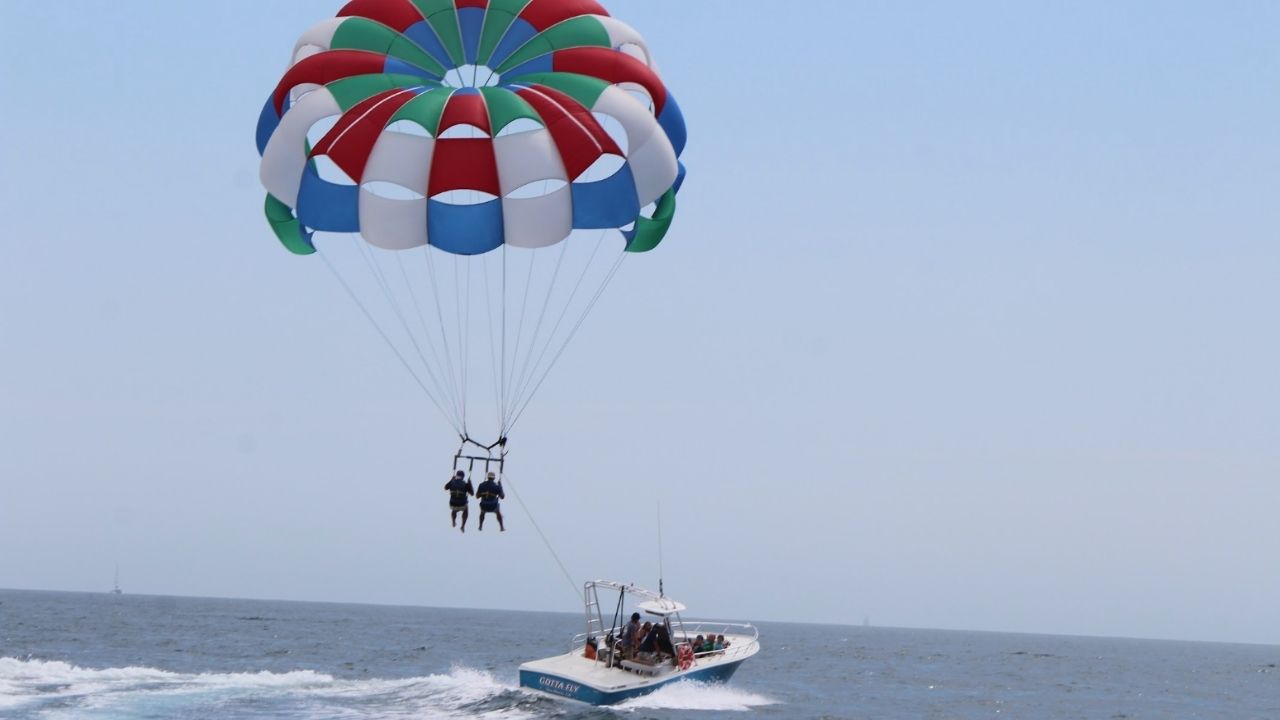
The biggest parasailing vs zip lining difference is how you move. During parasailing, a boat tows the parasail while its movement creates lift. You rise into the air and remain attached to the boat by a towline. The U.S. Coast Guard describes parasailing as being carried aloft by a sail attached to a towline and towed by a vessel.
Modern winch-direct parasailing can make the process feel quite smooth. At San Diego Parasail Adventures, riders take off from the boat’s flight deck. After the flight, they are slowly reeled back to the same deck. There is no need to jump from a cliff or run from a platform.
Zip lining works in another way. Your harness connects to a trolley that moves along a cable. Gravity helps carry you from one point toward another. Depending on the course, you may move through several lines and platforms.
2. The Sensation of Speed Feels Very Different
This is where many people make their final choice. Parasailing often feels slower than expected once you are high above the water. You may feel the wind, yet the experience can become surprisingly calm.
Zip lining puts movement front and center. You see the trees, ground, or canyon move beneath you. That visual motion can make the ride feel much faster. Some modern zip lines are specifically designed as high-speed, long-distance rides.
3. Parasailing Offers Open Ocean Views
Location changes the whole mood of an adventure. Parasailing is closely tied to the water. That means the flight can give you broad, open views instead of a course built around trees or platforms.
Zip lines often offer a closer view of the land. Depending on the course, you might fly above trees, valleys, or rocky terrain. You feel part of the landscape instead of floating above a wide-open scene.
4. The Gear and Ride Setup Are Different

Both activities rely on specialized equipment, but the systems serve different jobs. In parasailing, the setup involves the parasail wing, harness system, towline, winch, and towing vessel. The boat plays a central role throughout the flight.
For zip lining, the setup normally involves a harness, cable, trolley, connectors, platforms, and braking systems. Professional standards cover the design, inspection, operation, and equipment used for zip lines and canopy tours.
5. Parasailing Can Feel Less Physically Demanding
Worried that an aerial adventure means climbing, jumping, or having great upper-body strength? Parasailing may appeal to you. With boat-based winch parasailing, the crew manages the launch and return while you remain secured in the flight system.
At San Diego Parasail Adventures, for example, riders are reeled out from the vessel and then slowly brought back to its flight deck. The operator has offered winch-direct parasailing for more than 36 years.
A zip line course can involve more movement. You may need to walk between stations, climb stairs, cross platforms, or position yourself for each launch. The exact effort depends on the course, so always check its requirements before booking.
6. Weather Plays a Big Role in Parasailing
Weather matters for any outdoor adventure. For parasailing, though, wind and changing marine conditions deserve special attention. A nice beach day does not always mean ideal flying conditions.
The U.S. Coast Guard’s 2025 parasailing safety alert strongly recommends that operators keep checking weather conditions and stop operations well before squalls, thunderstorms, or weather fronts affect the activity.
Zip lines can also close for poor weather. Wind, lightning, rain, and site conditions may affect operations. Either way, never treat a weather delay as wasted time. If a trained crew says conditions are not right, waiting is the smart call.
7. Parasailing Gives You More Time to Take in the Flight
One of the most useful parasailing vs zip lining differences is how the experience unfolds. A zip line run can feel like a burst. You launch, move across the cable, stop, and then prepare for the next section.
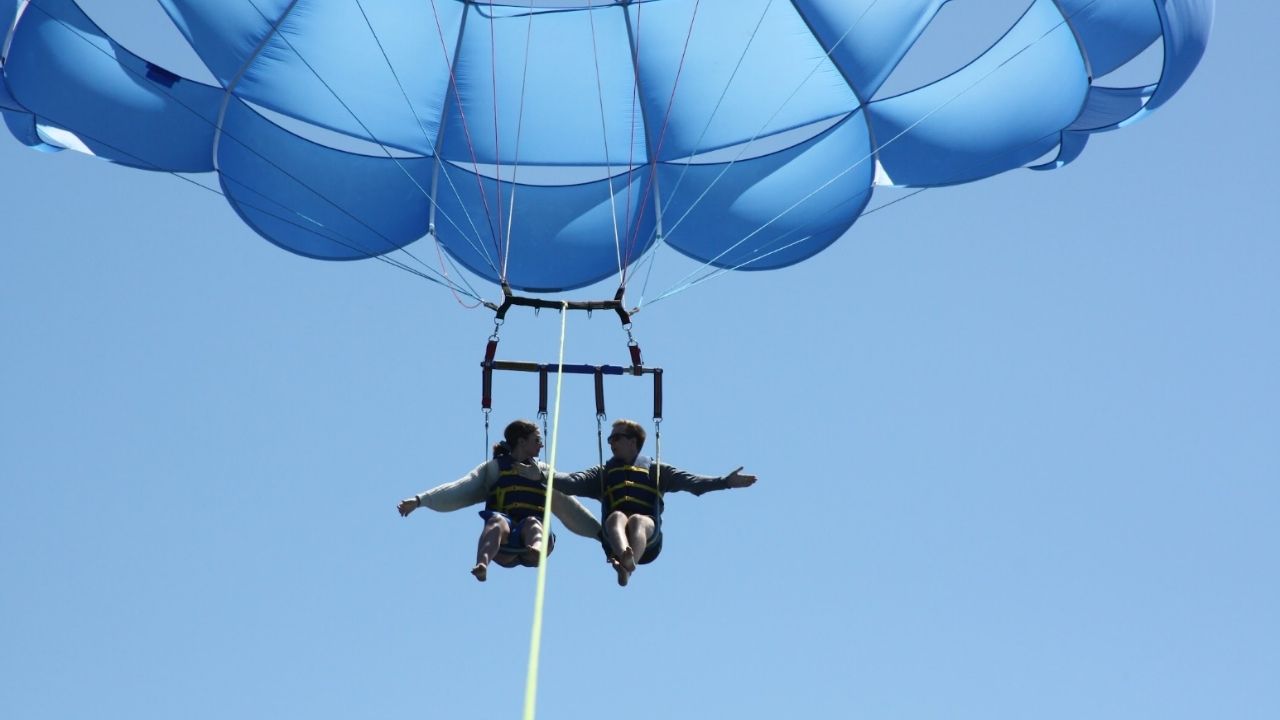
Parasailing gives you sustained time in the air. San Diego Parasail Adventures currently offers two flight options. Its CloudHopper deploys 600 feet of flight-line with about six to eight minutes of airtime, while its SkyRider deploys 800 feet and offers about eight to ten minutes. Both experiences, including the boat ride and SkyTour, are listed at about 1.25 hours overall.
That extra time changes the mood. You can settle in after the first rush and start looking around. Sometimes the best part comes once you stop thinking about the height.
Which Is Better for First-Time Adventure Seekers?
Both can work for beginners. The better option depends more on your nerves than your skill level. You do not need to be an extreme sports expert just to enjoy either experience.
Parasailing may suit you if you:
- Want a smooth, scenic aerial experience.
- Love beaches, boats, and ocean views.
- Prefer less climbing and walking.
- Want sustained time in the air.
- Like thrills without constant fast movement.
Zip lining may make more sense if you:
- Enjoy speed and quick action.
- Prefer forests, hills, or canyon scenery.
- Like moving between different sections.
- Do not mind platforms or short climbs.
- Want several brief bursts of excitement.
Do not choose only because friends call one option “scarier.” Fear works in odd ways. Someone nervous on a tall platform may feel relaxed once floating over water.
What Should You Check Before Booking?
A good adventure starts before you put on a harness. Never book based only on the biggest height or fastest ride. Operator practices, weather policies, equipment, and clear instructions matter much more.
Before paying, check:
- Current age and weight requirements.
- Health or mobility restrictions.
- Weather and cancellation rules.
- What clothing and footwear are required.
- Whether guides provide a safety briefing.
- How equipment is inspected and maintained.
- Whether photos or other add-ons cost extra.
For zip lines, look for operators that follow recognized industry practices. ACCT standards address design, performance, inspection, operational procedures, and staff competencies for zip line and challenge-course operations.
For parasailing, pay close attention to weather practices and crew instructions. The Coast Guard specifically highlights weather monitoring, emergency readiness, and familiarity with equipment limits as key safety considerations.
Parasailing vs Zip Lining: Which One Should You Choose?
Choose parasailing when the idea of floating above the ocean makes you smile. It combines a boat trip, coastal scenery, height, and flight in one outing. For travelers already spending time near San Diego’s waterfront, it also fits naturally into a beach day.
Choose zip lining when speed is the main attraction. It can be a better match when you want a land-based course with fast movement and several stages. The repeated launches can keep the adrenaline going.
The parasailing vs zip lining debate has no universal winner. Parasailing leans toward scenic flight and smooth airtime, while zip lining focuses more on speed and movement across the landscape. Pick the one that matches the story you want to tell afterward.
FAQs
Q1: Is parasailing or zip lining better for beginners?
Parasailing is often the easier pick for first-timers who want big views with little effort. Zip lining suits beginners who crave speed and a hands-on thrill. Both can be safe with a pro operator, but they feel very different on the day.
Q2: Do you need experience to go parasailing?
No. You do not need prior parasailing experience for a commercial ride. The crew explains the steps, checks your harness, and manages the winch and canopy. You just sit back and enjoy the view
Q3: Is parasailing physically difficult?
Not really. It is one of the least active air sports for the rider. The winch boat does the work. You launch and land from the deck, so there is no beach run or high jump.
Q4: Is parasailing worth trying in San Diego?
Yes, if you want a new angle on the city. The mix of a short boat ride, a few minutes in the air, and a broad coastal view makes it feel different from any land tour. You get the thrill of flight without much physical strain.