
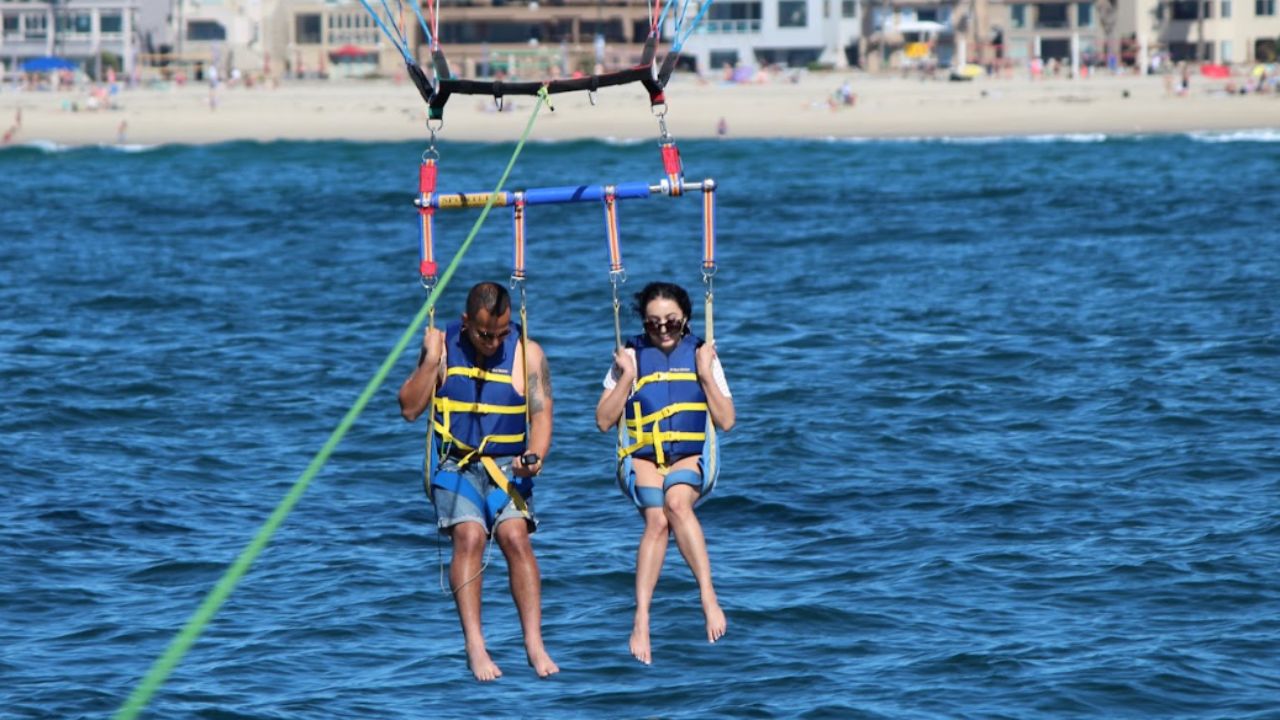
Tandem parasailing puts two people under one canopy, towed behind a boat above the water. At Go Parasailing in San Diego, you take off from the boat deck. You fly for about six to ten minutes. No prior experience or swimming skills are needed to enjoy this adventure. The whole outing takes around 1.25 hours.
| Detail | Tandem at Go Parasailing |
| Riders per flight | Two, flying side by side |
| Launch point | The boat’s rear flight deck |
| Airtime | About 6–8 minutes (CloudHopper) or 8–10 minutes (SkyRider) |
| Total outing | About 1.25 hours, boat ride included |
| Minimum flying age | 6, flying with an adult |
| Swimming required | No |
| Combined weight | Up to about 450 pounds |
| Price | $99 (CloudHopper) or $129 (SkyRider) per person, plus fees |
What Is Tandem Parasailing?
Tandem parasailing lets two riders share one canopy and fly side by side. A boat tows the canopy on a long line. As the boat moves, wind fills the canopy and lifts you off the deck. It works best with a friend, partner, or family member.
How a Tandem Flight Works
The process follows the same steps every time:
- The crew fits each rider with a harness and a life jacket.
- The crew checks the lines, buckles, and canopy before anyone leaves the deck.
- The boat moves forward, and the winch feeds out the towline.
- The canopy fills with air and lifts both riders gradually.
- The boat holds a steady speed, and the line length sets your height.
- The winch brings you back to the deck at a slow, controlled pace.
How Tandem Compares With Other Formats
| Format | Riders | Best for |
| Solo | One | Riders who want a private, quiet flight |
| Tandem | Two | Couples, friends, and nervous first-timers |
| Triple | Three | Families and small groups |
Many people choose tandem because it adds a social side to the flight. You can point out boats, react to the view, and laugh together in real time. Nervous flyers often feel braver with someone right beside them.
What Winch-Direct Means
Go Parasailing uses a winch-direct system. You launch from and land on the boat’s rear flight deck. Nobody runs down a beach or wades into the water. The company has operated since 1989, and its captains hold US Coast Guard licenses.
Is Tandem Parasailing Suitable for Beginners?
Yes. Tandem is one of the most popular choices for first-timers. You don’t steer, pull, or control anything. The crew handles the boat, the towline, and the winch. Your only job is to relax and enjoy the view.
What Beginners Should Know
- You need no training, athletic skill, or prior flying experience.
- The crew explains your harness, seating position, and hand signals before takeoff.
- Guests should arrive at least 30 minutes early.
- The boat carries no more than 12 passengers per trip.
- Reservations are smart, since popular time slots fill quickly.
Takeoff Feels Gentler Than You Expect
Many first-timers worry that takeoff feels like a jump. It doesn’t. With winch-direct parasailing, you rise as the line feeds out. The lift feels more like a swing slowly rising than a sudden drop. Landing works the same way in reverse.
A slow breath and a look at the horizon helps most nervous riders. Tell the crew if anything feels tight or uncomfortable. They would rather adjust a strap than send you up feeling unsure.
Who Should Check First
Tandem suits most people, but a few conditions need a conversation before you book. Tell the operator about any of these:
- Back or neck pain, or a recent injury
- Recent surgery
- Heart concerns
- Severe motion sickness
- Pregnancy or limited mobility
Riders who feel uneasy about heights or strong wind can also ask the crew for advice. The captain makes the final call on every flight. Weather, weight, and equipment all shape the setup. A tandem flight is never guaranteed in advance.
How High Do You Fly, and How Long Does the Experience Take?
Most commercial operators fly between 300 and 500 feet above the water. A 600-foot towline usually lifts riders to around 300 feet. An 800-foot line can take them up to about 500 feet.
Flight Options at Go Parasailing
| Detail | CloudHopper | SkyRider |
| Towline | 600 feet | 800 feet |
| Typical height | Around 300 feet | About 350–450 feet |
| Airtime | 6–8 minutes | 8–10 minutes |
| Total outing | About 1.25 hours | About 1.25 hours |
| Price | $99 per person, plus fees | $129 per person, plus fees |
CloudHopper is the most popular option. SkyRider is the higher and more extreme flight. Both work well for tandem riders.
What Changes Your Flight Height
Your final height depends on the day. The captain checks several things before takeoff:
- Wind speed, with 12 to 20 miles per hour being the safest range
- Water conditions
- The towline length approved for the area
- The number of people flying together
- The type of equipment
Two riders add weight to the canopy. The boat may adjust your height slightly to account for that. Light, steady wind usually allows higher flights. Strong wind can keep you lower, even on a long line.
How the 1.25 Hours Breaks Down
The airtime is only part of the outing. Here is what fills the rest:
- Check-in and the safety briefing
- Fitting your harness and life jacket
- The boat ride out to the flying area
- Your turn in the air
- The ride back to the dock
Plan on a little under two hours from arrival to finish. That leaves room for dinner, a beach stop, or another activity afterward. The flight starts and ends at Mission Bay. It pairs easily with a morning on the sand nearby.
Do You Need to Know How to Swim?
No. Swimming isn’t normally required for a tandem flight. Both riders wear life jackets from start to finish. Takeoff and landing happen on the boat’s flight deck, not in the water. Our first-time parasailing tips cover this in more detail.
Why Life Jackets Matter
A water landing is rare, and it happens only in an emergency. The life jacket handles that unlikely case. Keep it secured for the whole flight. Don’t adjust or unclip anything yourself. Ask the crew to make every change.
If you can’t swim, tell the crew before you board. They will know your comfort level and plan around it. Your tandem partner doesn’t need to swim either.
What Should You Wear, and Will You Get Wet?
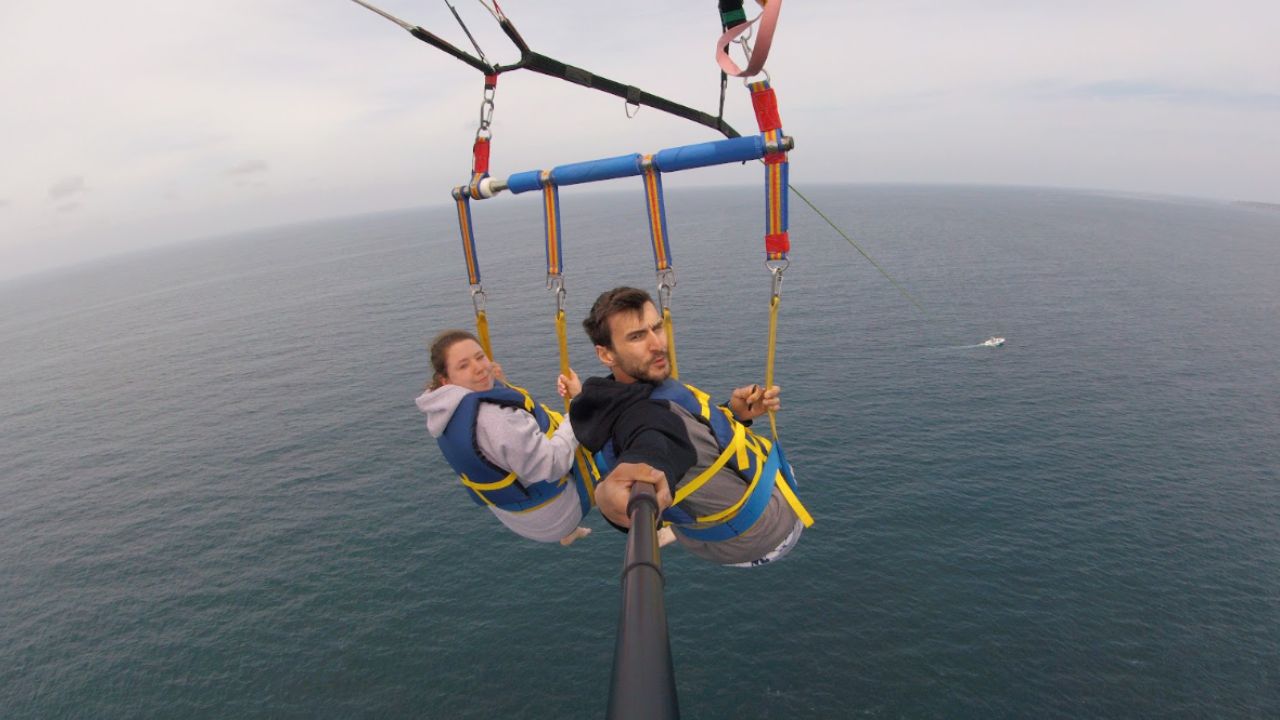
Casual beachwear works well. Your clothes should be light, snug, and quick to dry.
What to Wear and What to Skip
| Wear | Skip |
| Swimwear or quick-dry athletic clothes | Heavy cotton and denim |
| Fitted tops and board shorts | Baggy shorts and loose skirts |
| Sunglasses with a retention strap | Loose hats and scarves |
| A light windbreaker for cool days | Dangling jewelry and watches |
| Reef-safe sunscreen | Phones and large bags |
You fly barefoot. Sandals are fine for walking to the boat, but you will remove them aboard. Tie back long hair. Bring a towel for the ride home.
Will You Get Wet?
Usually not. With a boat-deck launch, most riders start and finish dry. Some crews may offer a light foot or leg dip when conditions allow. If you want to stay dry, tell the captain before takeoff. If you want the dip, ask then too.
Cooler mornings can feel breezy over the water. A fitted jacket or hoodie helps. Avoid anything bulky that could interfere with your harness.
Cameras and Phones
Leave your phone with your belongings. Loose gear can fall during a flight. If you want photos, ask about the optional Photo & Video Package. A tethered camera captures hundreds of photos. It also records up to 10 minutes of video, for $49.95 per flight.
What Passenger Weight Restrictions Apply?
You can’t parasail at any weight, but most people fall within safe limits. The usual range is 150 to 450 pounds combined. Go Parasailing sets its limits based on wind, sea conditions, and equipment checks.
Weight Rules by Flight Type
| Flight type | Weight guideline |
| Solo | A minimum of about 150 pounds |
| Tandem | A combined maximum of about 450 pounds |
| Triple | A combined maximum of about 450 pounds |
Why Weight Limits Exist
Weight keeps the canopy balanced. If the combined weight is too low, the wing may climb too fast in windy weather. If it is too high, the boat may struggle to hold speed. Tandem flights often help lighter riders. Two riders create better lift and balance in mild wind.
How the Crew Checks Weight
The crew asks for your approximate weight before the flight. They may use a scale to confirm the combined total. The check takes a few seconds. It helps them choose the right seat and harness.
Breezy San Diego afternoons can lower the maximum combined weight. Calmer mornings often allow a bit more. If conditions shift, the captain may change the group pairings before takeoff. Kids can fly tandem with a parent. They must be at least 6 and meet the minimum weight.
Better With a Buddy Up There
Flying alone is great, but sharing it is better. Tandem parasailing gives you a front-row view of Mission Bay and the San Diego coast. You also get someone to turn to when the boat shrinks below. Pick a flight and check your weight range. Ensure to wear something quick-drying. The crew handles everything else.
Book your Go Parasailing flight today and bring your flying partner along.
Frequently Asked Questions
How risky is tandem paragliding?
Tandem paragliding carries real risk, like any aerial sport. Flights with a certified pilot are far safer than solo flying. Most accidents trace back to weather and pilot judgment, which professional pilots are trained to manage. Tandem flights also carry a reserve parachute for emergencies.
What is the difference between parasailing and paragliding?
Parasailing is a boat-towed ride where the crew controls your height and speed. Paragliding is a ground-launched sport where the pilot steers the canopy. Parasailing needs no training. Paragliding takes skill, and tandem riders fly with a certified pilot.
Can two or three people parasail together?
Yes. Parasailing comes in solo, tandem, and triple formats. Tandem carries two riders, and triple carries three. At Go Parasailing, the captain decides the final setup. Wind, weather, and combined weight all play a part, so no setup is guaranteed.